Notes on Resume Logic Errors: The Interpersonal Gaps
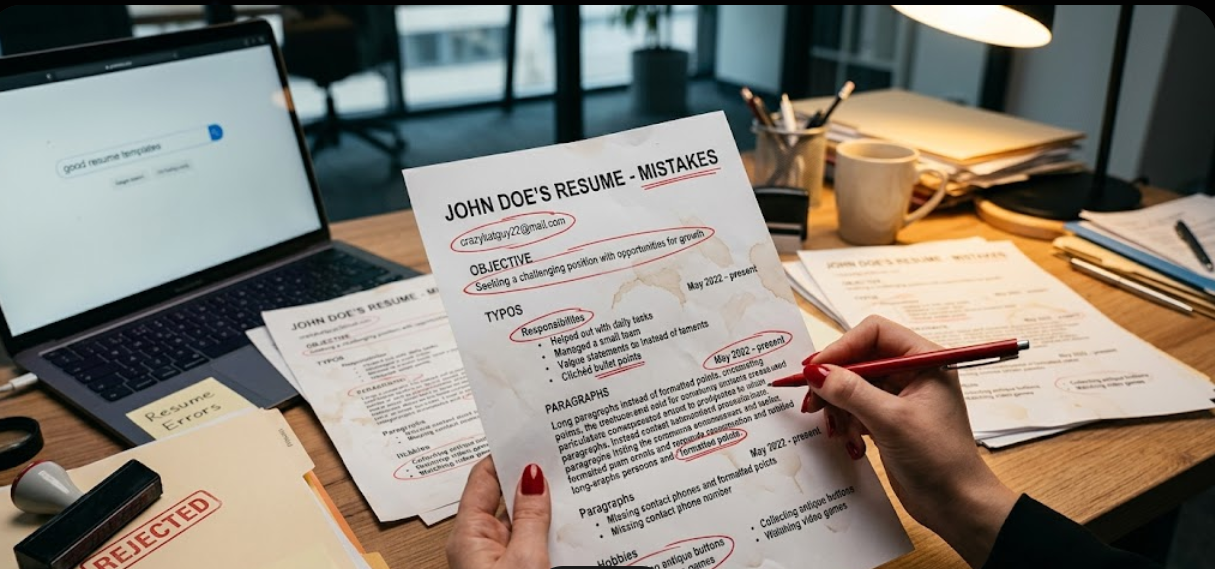
A recruiter's honest notes on the silent narrative contradictions and emotional inconsistencies that instantly break social trust during screening.
When I’m looking at a resume under pressure, I'm not really running a logical verification of hard skills. I’m doing something much more subjective, almost uncomfortable: I’m trying to forecast what kind of emotional atmosphere this person will create inside a team. Sourcing is basically a risk-prediction game. Before I ever schedule a call, I’m subconsciously predicting future conflict behavior from tiny, quiet writing signals. You can feel the exact moment when emotional maturity leaks through a sentence—or when it’s completely absent. Some profiles feel emotionally heavy before an interview even begins. If a candidate uses aggressive dominance signaling in their wording, packed with territorial self-promotion, my brain triggers a quiet warning. It suggests an ego fragility that will be exhausting to manage, a person who might constantly need validation or create silent friction in every engineering alignment meeting.
There is a deep social trust collapse that happens when someone over-claims their contributions. You see a bullet point where an individual claims they *'pioneered the company's entire legacy cloud infrastructure'*, but their title was a mid-level engineer. That exaggerated ownership doesn't project senior capability; it reveals a profound insecurity. It signals attention-seeking ownership rather than shared ownership. As a recruiter, you start anticipating the team politics. You get this subconscious fear reaction—you imagine them arguing with product managers, defensive about boundaries, or bringing a subtle blame-culture tendency into the room when a deployment fails. Emotionally secure people describe their work differently. They have the confidence to use calm language, stating their contribution to a shared team victory in straightforward, honest terms. That quiet restraint builds immediate managerial trust because it signals emotional stability, not just technical ability.
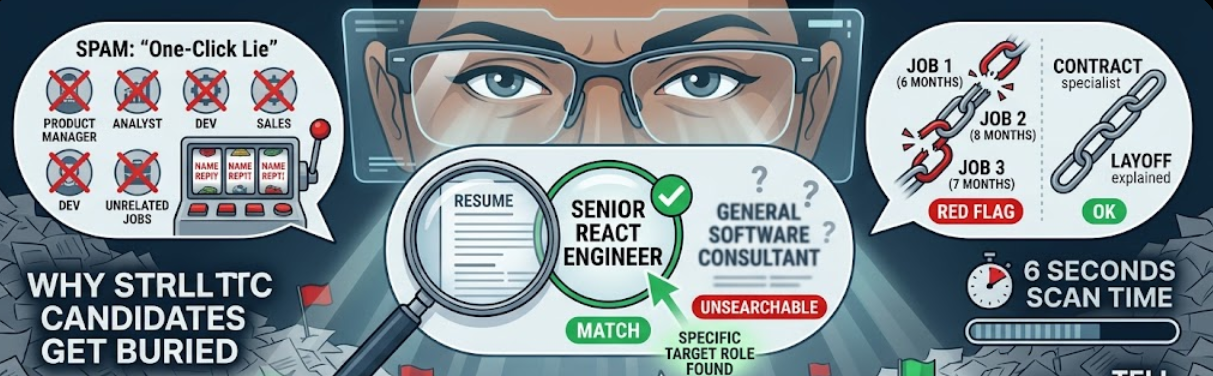
Another signal of anxiety is when a resume tries too hard to over-control how they are perceived. An emotionally secure professional naturally leaves interpretive space. They describe their projects plainly and trust that their work stands on its own. In contrast, an insecure candidate will stuff every line with high-stakes strategic buzzwords, desperate to dictate exactly how smart or critical they look. It feels like they're trying to win a fight before anyone has even challenged them. That frantic writing rhythm unintentionally signals future communication problems. It tells me they might sound exhausting to collaborate with on a daily basis. Sourcing isn't a search for the most polished hero; it's a search for a peer who creates calm rather than tension inside a team.
At the end of the day, a resume is just a written self-concept. The profiles that actually get calls are the ones that don't feel politically or emotionally expensive. They are the ones that simply project a quiet, secure maturity—inviting you into a calm, authentic conversation without demanding that you validate their ego.