Resume vs CV: Stop Sending the Wrong Document to Recruiters
Clear the confusion, avoid regional formatting traps, and align your application with recruiter expectations.
Why Document Type Matters
The strategic choice between a focused summary and a complete academic history
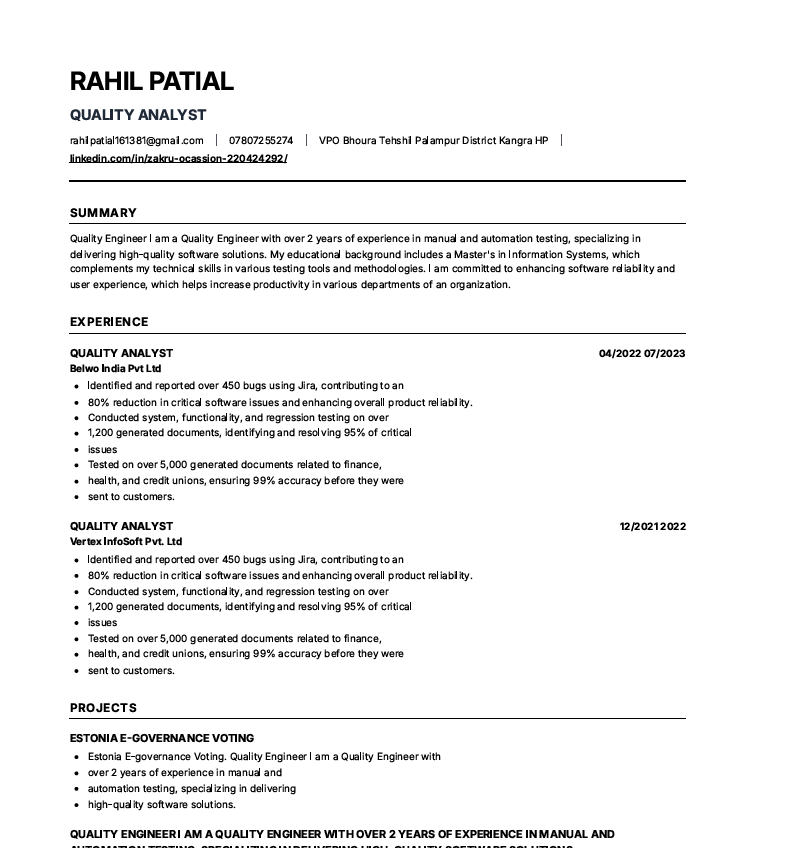
If there is one common application mistake that consistently gets well-qualified candidates passed over early in the hiring process, it is sending a Curriculum Vitae (CV) when a hiring manager expected a targeted resume.
Let me be clear: corporate recruiters will not sift through a multi-page academic document to find your relevant business wins. We scroll through PDF files on screens where clarity and conciseness are everything. Sending a five-page document listing your high school awards or academic publications for a corporate sales or engineering role is the quickest way to look disorganized. You must know exactly which document matches your industry, experience, and geographic target.
The primary difference between a resume and a CV is not just the page limit; it is the fundamental purpose and target audience. A resume is a highly tailored marketing tool designed to prove your direct competence for one specific job profile. It is a fluid, reverse-chronological summary of your key skills and major highlights, rarely exceeding two pages. In contrast, a CV is an exhaustive, static record of your entire academic and professional life, intended to establish deep credentials in fields like science, medicine, or academia. By treating these two documents as interchangeable, you risk burying your most competitive highlights under a wall of irrelevant historical data.
By aligning your application document with regional expectations and industry norms, you ensure your professional value is immediately readable to the person reviewing your file.
When a CV Makes Sense
Understanding which industries and career tracks require an exhaustive academic CV instead of a concise business resume.
The Business Resume
Designed for the commercial and private sectors—such as engineering, finance, marketing, design, and sales. It acts as a concise, highly tailored advertisement of your skills. The recruiter looks for selective, high-impact bullet points and key competencies that align perfectly with the target job profile.
- Length: 1 to 2 pages
- Focus: Direct business outcomes, tools, and achievements
- Nature: Fluid (edited and tailored for every job post)
The Academic CV
Reserved for university professors, research scientists, post-doctoral candidates, and medical doctors. A CV does not filter information; it catalogues everything. It establishes peer-reviewed authority, list grants, research fellowships, scientific patents, university lectures, and dissertations.
- Length: No limit (easily grows from 3 to 10+ pages)
- Focus: Publications, research panels, and academic pedigree
- Nature: Static (just appends new achievements at the end)
The Global Terminology Trap
Regional naming conventions are the biggest trap in professional applications.
In the United States and Canada, the distinction is clear: you submit a resume for corporate roles and a CV for research and clinical positions. However, in the United Kingdom, Ireland, Europe, and New Zealand, the word "Resume" is rarely used. European companies will ask you to submit a "CV," but they do not want a multi-page list of your college clubs. They expect a highly focused, two-page document that is structurally identical to an American resume.
In regions like India, Australia, and parts of Southeast Asia, the terms are frequently used interchangeably. A company might ask for a CV or a "Bio-data" (which is an older format used in some traditional settings), but they still evaluate your profile based on brief, outcome-oriented highlights. If you send an exhaustive, five-page scientific CV to a private tech firm in Australia, it will likely be discarded due to lack of conciseness. When applying globally, always default to a targeted, well-spaced two-page format unless you are specifically applying to an academic institution. Focus on direct bullet highlights rather than academic details unless requested.
Always prioritize the reader's local customs over the label on your document—relevance and clarity are what matter most.
Highlighting Key Accomplishments
Regardless of the document title, recruiters scan your history looking for clear highlights rather than a laundry list of chores.
When you have a strong background of skills and experience, concentrate your valuable page space on key skills and high-impact bullet points under each company. Make sure to use active, strong action words at the start of every point to immediately drive reader interest. Additionally, clearly mention your type of work engagement—such as full-time, contract, freelance, or remote—so hiring managers have clear context.
A common mistake is listing daily duties instead of selective highlights that prove your actual impact. If you designed a system or optimized a process, explain the exact metrics, team size, and tools you utilized. For seasoned candidates, your last two professional engagements are the most important sections of your document. Make sure those bullet points speak directly to your advanced technical competencies and business results, leaving minor administrative tasks out entirely. By curating your bullets around these high-value milestones, you demonstrate professional maturity and make scanning easy.
By focusing on selective, results-oriented bullet highlights, you allow the reader to easily scan and understand your background during the initial review.
Formatting Differences Explained
A quick comparative look at how different sections map to each document type.
| Layout Component | Resume Treatment | Academic CV Treatment |
|---|---|---|
| Professional Summary | A sharp, results-oriented 3-line statement highlighting your direct commercial value. | Replaced by a broad list of academic fields, research concentrations, or teaching credentials. |
| Publications & Grants | Almost completely excluded, unless a specific patent directly supports the commercial role. | Exhaustive lists of every published paper, academic grant value, patent, and co-author credit. |
| Work Experience | Reverse-chronological timeline focused on major highlights of the last 10–12 years. | An archival list of every post-grad teaching assistantship, residency, and tenure held since college. |
| Education Details | Highly simplified—university name, degree, and graduation year (usually placed at the bottom). | Extremely prominent—often listing thesis titles, advisory committees, oral defenses, and honors. |
Common Resume Layout Mistakes
Hiring managers immediately reject applications with these layout errors. Make sure your document is clean.
Academic Clutter on Corporate Resumes
Listing exhaustive lists of university publications, old research panels, or college club memberships on a corporate sales or engineering application clutters your page and dilutes your business value. Keep it professional.
The Multi-Page Spillover
Allowing random academic timeline details to push a corporate resume into page three or four looks extremely unprofessional. Keep business resumes within two pages with balanced spacing.
Passive Responsibility Bullet Points
Starting your bullet points with weak, passive verbs like "Responsible for" or "Assisted with" instead of active ownership verbs fails to capture recruiter attention during scanning. Always use strong action words.
Including Unnecessary Personal Details
Adding your age, marital status, or profile pictures on corporate resumes for North American and UK markets is a major compliance risk. Most HR teams will auto-delete your file to prevent bias.
Let Us Handle the Spacing
Stop worrying about formatting rules. Use our automated builder to instantly create a perfectly spaced, highly readable resume or CV tailored to your industry.
Frequently Answered
Calm recruiter insights answering the most common questions regarding resumes and CVs.
Can I use a CV for a corporate job?
Only in countries like the UK, Ireland, and mainland Europe where 'CV' is simply the standard word for a 2-page business resume. In the US and Canada, sending a multi-page academic CV for a standard business role is a major mistake that will lead to rapid rejection.
Which is better for freshers?
A single-page resume is always better. For a fresher, it is highly recommended to write in detail about your targeted job role. Focus on aligning your core knowledge, specific tool capabilities, and tech stack with the job requirements. Feature your academic certifications, hands-on internships, and industrial training courses prominently to prove your day-one capabilities without bloating your document.
Do CVs need to be updated for every job?
No. An academic or medical CV is a cumulative historical record that remains static; you simply append new publications or lectures at the end. However, you must always accompany it with a highly targeted cover letter explaining why your academic background matches the specific laboratory or tenure track.
Should I include a profile photo?
Never on corporate applications in the United States, United Kingdom, or Canada due to strict anti-discrimination and HR compliance laws. However, it is standard practice and often expected in countries like Germany, France, and Switzerland. Always research the local hiring custom before applying.
Is my LinkedIn profile a Resume or a CV?
LinkedIn is effectively a digital CV. It holds your entire, comprehensive historical timeline. Your corporate resume should act as a 'highlights reel' of your LinkedIn profile, curated to capture recruiter interest for one specific job profile.