The Definitive Writing Framework

How to Write a Resume: Why Your Experience is Being Ignored (And the Step-by-Step Fix)

Learn the high-conversion writing strategies used by the top 1% of candidates to bypass ATS filters and land interviews at Fortune 500 companies.

Quick Answer: What is the secret to a great resume?

To master how to write a resume, you must shift from "listing tasks" to "demonstrating impact." A top-tier resume uses a single-column structure, embeds exact-match ATS keywords naturally, and follows the [Action] + [Task] + [Result] formula for every bullet point. Your goal isn't to show what you were responsible for, but what you actually achieved for the business.

01The Visibility Gap: Why 98% of Resumes Fail the Initial Scan

Most resume tips focus on fonts and margins, but they ignore the fundamental truth: Most resumes fail because they are too generic. In a sea of "Hard workers" and "Team players," recruiters are looking for reasons to click "Reject."

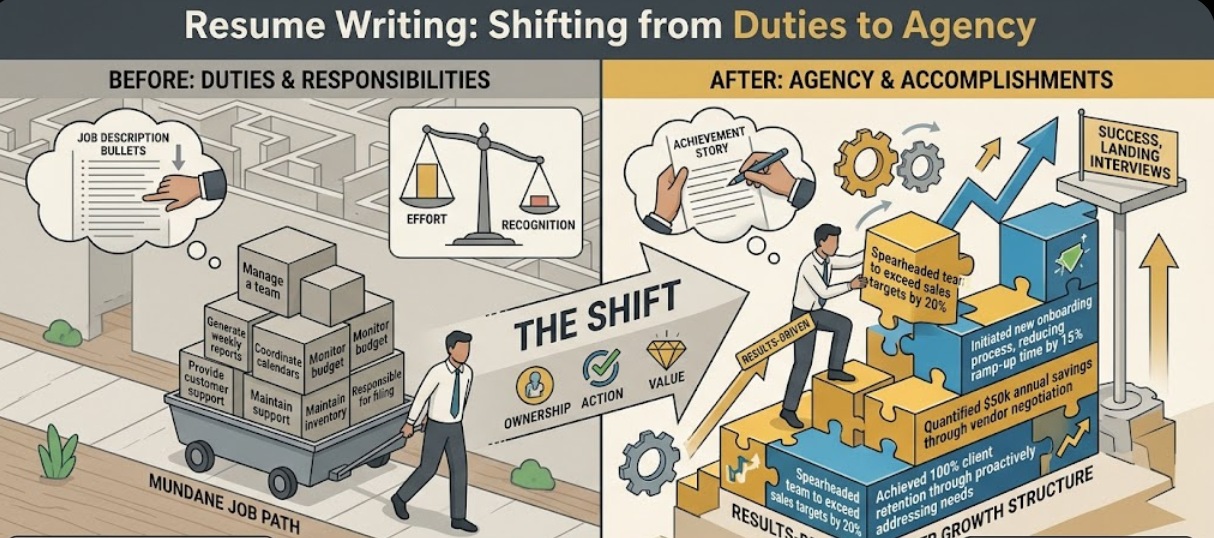
  • The "Writing vs. Listing" Problem: Listing duties tells a recruiter what your company expected of you. Writing impact tells them what you actually delivered.
  • The Generic Trap: Sending the same resume to 100 jobs is a resume mistake that leads to a 0% match rate in the ATS.
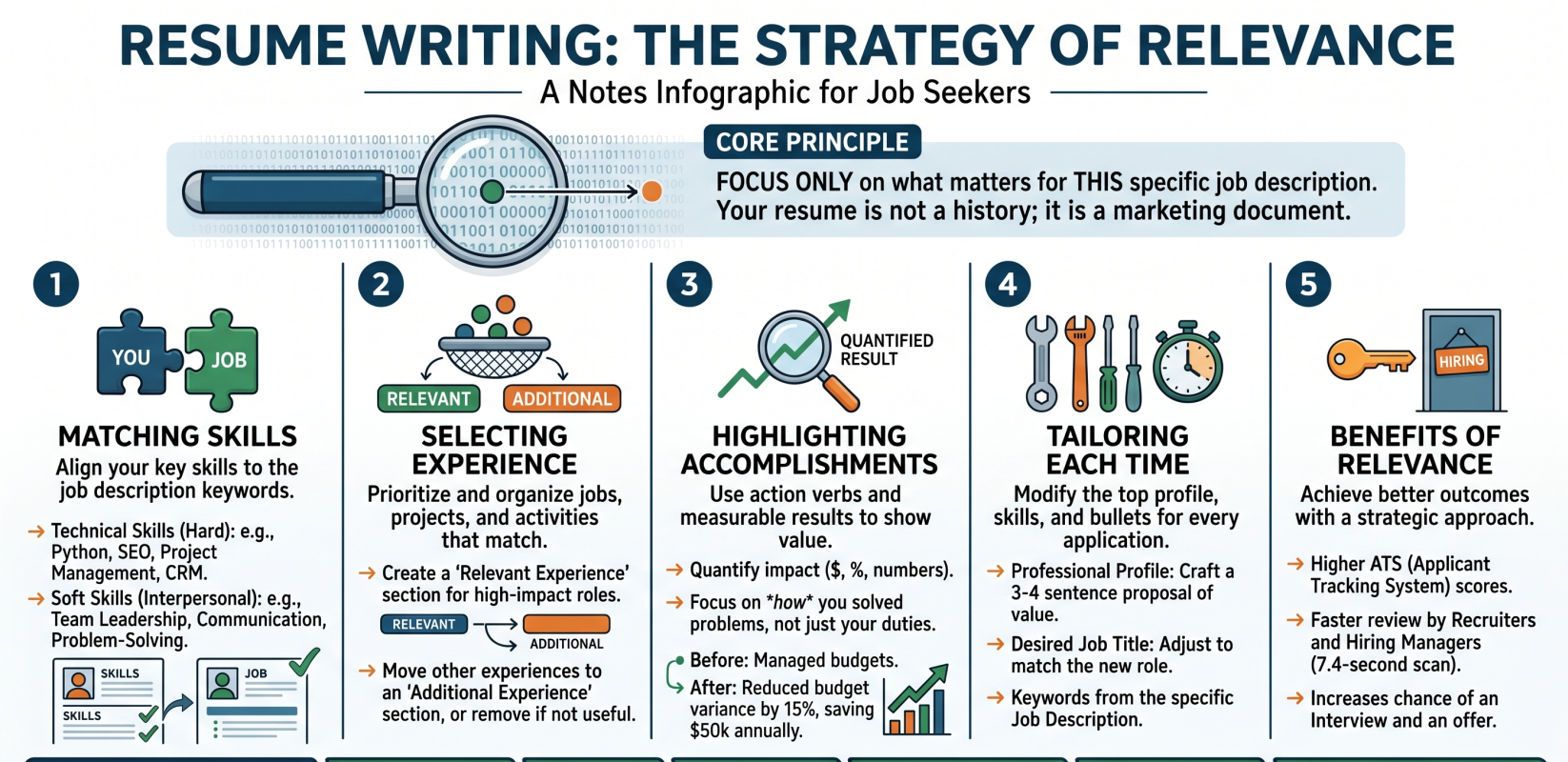
  • The Fix: Treat your resume as a marketing document for a specific problem. If the job description is the "Problem," your resume must be the "Solution."

Is your writing strength hurting your chances?

2. The Step-by-Step Resume Writing Guide: Structure Over Art

Recruiters read resumes in an "F-Pattern." They don't have time to admire your creativity; they want to find your value in 6 seconds. This resume writing guide prioritizes a hierarchy that aligns with human curiosity.

The Perfect Structural Sequence:

1. Header:

Your professional identity. Must include Name, Phone, Email, LinkedIn, and your Target Job Title.

2. Summary:

The 3-line elevator pitch. Focus on your niche and your "Big Win."

3. Skills:

A clean index of hard skills. This is the ATS resume search optimization layer.

4. Experience:

Reverse-chronological evidence. Use result-driven bullet points only.

5. Education:

Proof of foundational knowledge. Keep it concise at the bottom.

3. Writing the Header: Identity and "Trust Signals"

Your header is the first thing a recruiter sees. If it lacks a target title, they have to guess what role you want.

  • What to Write: Your name in 16-18pt font. A job title that matches the one you're applying for (e.g., "Senior Software Engineer").
  • What to Avoid: Using unprofessional emails (e.g., "coolguy99@gmail.com") or including your full home address (City and State is enough).
  • Real Example: "Jane Doe | Senior Project Manager | 555-0123 | linkedin.com/in/janedoe"

4. The Professional Summary: Crafting a Hook That Stops the Scroll

Objective statements are dead. Resume writing in 2026 requires a Professional Summary—a statement of value, not a request for a job.

Weak Summary (Objective):

"Motivated professional seeking a challenging role in marketing to use my communication skills."

Strong Summary (Impact):

"Performance Marketing Specialist with 6+ years exp scaling SaaS revenue. Spearheaded campaigns that generated $2.4M in ARR while reducing CAC by 18%."

5. The Core Skills Section: Building an ATS Resume Index

Modern ATS resume logic relies on "Hard Skills." Do not waste this section on soft skills like "Punctual" or "Honest."

  • Do this: Create a categorized list of tools, software, and technical methodologies. (e.g., "Data Analysis: SQL, Tableau, Python").
  • Avoid this: Listing every skill you've ever heard of. If you can't answer an interview question about it, it doesn't belong on the resume.
  • Strategy: Match the "Must-Have" skills from the job posting 1:1.

6. The Experience Section: Results Matter More Than Responsibilities

This is the engine of your resume. Most candidates list their job description here. That is a fatal resume mistake. Recruiters want to see that you didn't just *show up* to work—you *won* at work.

The "So What?" Test:

Read your bullet point. Ask yourself "So what?". If the answer doesn't include a benefit to the company (Time saved, Money earned, Risk reduced), the bullet is weak.

7. The Resume Writing Formula: [Action] + [Task] + [Result]

Stop staring at a blank page. Use this mathematical formula to write every bullet point under your experience section.

[Action Verb] + [Specific Task] + [Quantifiable Result]
  • Example:

    "Developed a React-based checkout system that reduced cart abandonment by 24%, resulting in $120k additional monthly revenue."

Stop Writing. Start Building.

Our AI-powered builder writes result-driven bullets for you in seconds.

8. Quantifiable Achievements: Numbers are Your Most Powerful Keywords

Recruiters search for numbers. A resume with percentages and dollar signs signals authority.

Weak (Unquantified):

"Managed a large budget and saved the company money on vendors."

Top 1% (Quantified):

"Managed a $1.5M annual budget and negotiated new vendor contracts to save $200k (13%) in Opex."

9. Why Bullet Points and White Space Matter for Scanning

A wall of text is a wall of rejection. Recruiters scan in 6 seconds; they don't read paragraphs.

  • The Rule of 5: No more than 5-6 bullet points per job. Group older roles with 2-3 bullets.
  • The 1.15 Rule: Use at least 1.15 line spacing. Let the recruiter's eye rest.
  • Bullet Length: Keep every bullet point under 2 lines. If it's 3 lines, it's a paragraph.

10. Common Resume Mistakes: Red Flags That Kill Credibility

  • 1. Listing "References available": Wastes space. If they want them, they will ask.
  • 2. Using a Headshot: Unless you're a model or actor, it triggers bias laws and can lead to automatic deletion in the US/UK.
  • 3. Functional Layouts: Hiding your timeline looks suspicious to recruiters. Always stick to reverse-chronological.

The Resume Writing Checklist: Final Audit

  • Target Job Title is present in the Header.
  • Summary focuses on accomplishments, not desires.
  • Every bullet point uses an Action Verb.
  • Numbers/Metrics appear in 80% of bullet points.
  • Dates are all consistent (MM/YYYY).
  • Resume is exported as a selectable PDF.

Resume FAQ

How long should my resume be?

1 page if you have less than 10 years experience. 2 pages if you have more. Never go to 3 pages unless you are in academia or research.

Should I use a "Skills" or "Tools" heading?

"Core Skills" or "Technical Proficiency" are standard. Avoid "Things I'm good at" or "Masteries."

Can I use ChatGPT to write my resume?

You can use AI for drafts, but you MUST personalize the metrics. AI doesn't know your specific project results.

Is a cover letter still necessary?

If the portal allows it, send it. It's an extra 10% chance to tell a story that your resume can't.

Recruiter-Approved • Expert-Verified • High-Impact Content

© 2026 Career Strategy Group. Designed for the Top 1%.