Understanding the Job Application Lifecycle
An experienced recruiter's realistic guide on what happens behind corporate databases and how to build a clear professional focus.
Focused Job Search Approach
The difference between applying blindly and establishing a clear professional focus
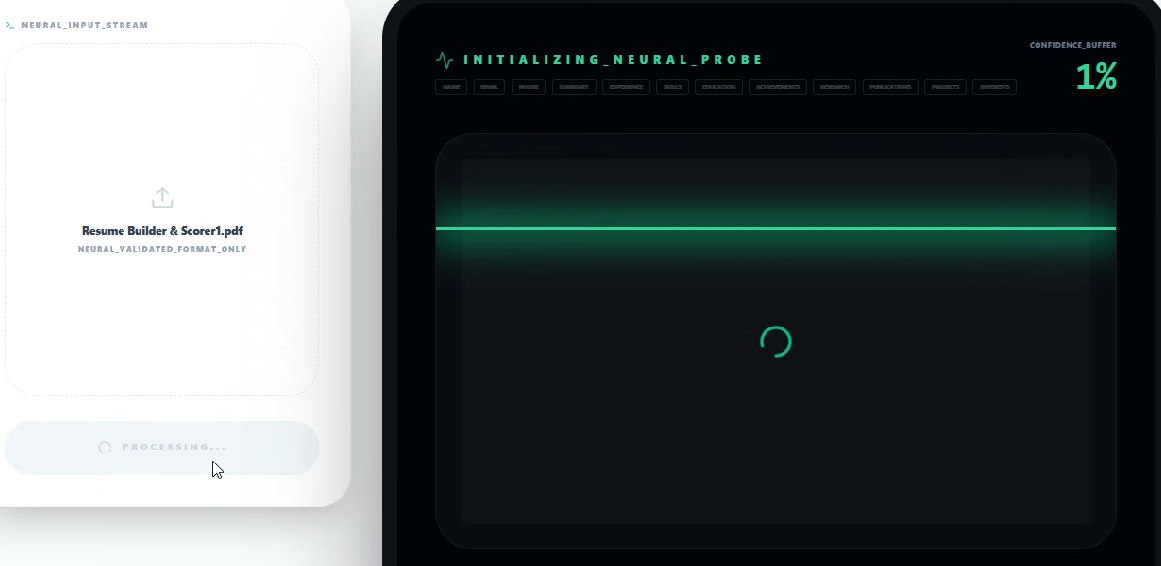
The Parsing Reality
The modern job application process follows a highly specific, multi-stage path.
The lifecycle begins the moment you apply for a particular role, introducing your document directly into a company's database. Depending on the size and structure of the company, an automated system may assist by indexing your details and flagging basic knockout requirements. If your background aligns with the core needs of the role, the recruiter will evaluate the profile before sharing it with team leads or hiring decision-makers for technical review.
Once the team lead and management approve your profile, the company invites you to participate in the formal interview rounds to assess your technical depth and working style compatibility. During these interviews, team leaders ask targeted questions about your hands-on training, specific tool competencies, and previous project outcomes to ensure you can handle real workflow priorities. If you pass these evaluation loops successfully, the hiring team meets to make their final selection and schedule your onboarding timeline. This entire process shows why you must select one specific career focus and keep your formatting clean from the start, as each stage of the lifecycle requires clear professional relevance.
Successfully navigating the lifecycle from portal scanning to management review requires absolute alignment between your skills and the role's actual priorities.
The Recruiter Review
Once you pass the automated checks, your application enters the short window of human evaluation.
A recruiter typically takes a brief look at a profile to verify your core timeline. We look directly for matching job titles, clear tenure lengths at previous firms, and relevant tool proficiencies that show your experience level. If the document is overly cluttered or lists unrelated skills, it can be difficult to make a quick assessment.
To stand out during this human review, you must customize the top third of your resume to align directly with the specific track you are targeting. For example, a candidate applying for a technical coordinator role should not list a broad, general summary that could apply to any open slot. Instead, highlight your hands-on preparation, specific industry certifications, and previous workflow familiarity early in your layout. This gives the hiring team an immediate reason to pause and read further, rather than moving to the next application in the stack. By keeping your formatting calm and professional, you establish credibility from the first glance.
Designing your profile for a quick, clear human scan is how you secure a phone screening.
Strategic Application Timing
How and when you submit your application can quietly influence your visibility in a crowded queue.
I recommend submitting your application within the first two days of a job listing going live. Recruiters frequently review the earliest batches of applicants first, and they may close the active review cycle once they have enough candidates for the interview loop. Applying early ensures your profile sits at the top of the queue before decision-makers experience evaluation fatigue.
It is also helpful to understand the unique behaviors of different enterprise platforms like Workday, Greenhouse, and Lever. Workday frequently struggles to auto-fill fields correctly from uploaded files, so you should always take a few extra minutes to manually verify every single field inside their portal. Greenhouse and Lever are much better at parsing standard text PDFs, meaning a clean, text-only document will transition smoothly into their system without formatting errors. When applying to multiple target companies, always prioritize applying directly on their official website rather than using quick aggregator submit features. This direct submission shows focused interest and ensures your custom details are preserved perfectly in their internal dashboard.
Applying early and manually verifying your portal inputs prevents common formatting errors that stall your candidacy.
Maintaining Professional Alignment
A common mistake that derails promising applications is a simple inconsistency between your resume and your online profiles.
Recruiters will almost always cross-reference your submitted resume with your public LinkedIn profile as soon as they consider you for a role. If your employment dates, job titles, or listed skills do not match, it creates immediate hesitation and weakens your credibility. Ensuring absolute consistency across all your public channels is essential for building professional trust.
Your public profile should serve as a broad confirmation of your career journey, while your submitted resume functions as a targeted pitch for one specific role. For instance, if you are a Computer Science graduate, your public page might showcase your general familiarity with debugging, database design, and software engineering. However, your submitted resume should be optimized for a single, focused target—such as a database administrator or a testing coordinator—aligning your keywords around that single discipline. Avoid claiming deep expertise in tools you only used briefly, as these inconsistencies are easily discovered during later vetting stages. By presenting a unified, honest career narrative, you make it easy for teams to verify your qualifications and proceed with confidence.
Ensuring your submitted resume matches your public profile details builds immediate professional alignment and trust.
Application Blueprint
A direct comparison of standard submission methods with optimized, recruiter-focused alternatives.
| Standard Submission (Avoid) | Focused Submission (Do This) |
|---|---|
| Uploading complex graphic templates with columns, graphs, and images. | Uploading a single-column, text-based PDF with standard, recognizable section headers. |
| Leaving application fields empty inside Workday or Lever portals because they are already present on the document. | Taking the time to manually audit and complete every requested work history field in the portal interface. |
| Applying for multiple different technical tracks simultaneously at the same company. | Selecting one single, specific field track and focusing your resume keywords specifically on that area of capability. |
Common Application Pitfalls
Recruiters quickly recognize inconsistent or unformatted files. Ensure your approach is targeted and professional.
Complex Column Formatting
Multiple text columns frequently cause parse errors during data extraction, resulting in blank or jumbled profile details on the recruiter's screen.
Inconsistent Online Details
Date gaps or differing job titles between your submitted PDF and public social channels weaken your credibility and slow your progress.
Missing Portals Data
Leaving key portal inputs empty because the information is already in your document makes your profile appear incomplete.
Generic Layout Filenames
Saving your file as a generic draft name is highly unprofessional. Always use your name and targeted track title in your PDF filename.
Polishing Your Final Presentation
Reviewing the final presentation of your application is just as critical as the text itself.
I suggest reading through your portal entries carefully rather than relying entirely on automated fields. Small details like verifying date alignments, keeping file formats as plain text PDFs, and using professional naming layouts prevent common processing delays. Ensuring everything matches your public online pages is essential for establishing professional credibility.
For candidates who are entering the job market, taking ownership of these final presentation checks is highly recommended. You should focus your document summary on a single technical track, rather than presenting a generic overview of multiple different tracks. By maintaining standard recognizable headers like 'Work Experience' and 'Education' instead of creative variations, you make your journey easy to follow. Value the reader's time by ensuring generous spacing and standard text hierarchy throughout. Taking these small steps shows that you respect the team's review process and are ready to contribute.
A clean presentation and matching dates across platforms will always establish professional trust.
Frequently Answered
Calm recruiter insights answering the most common questions regarding the job application lifecycle.
?Why haven't I heard back after applying?
Hiring pipelines frequently take weeks to process due to internal budget updates, high volumes of submissions, or ongoing promotions. Send a single polite message after two weeks, then focus on other vacancies.
?Does direct website submission perform better than aggregator portal platforms?
Yes. Direct website submissions go straight into the primary dashboard of the company and avoid common aggregator sync delays or parsing bugs.
?Should I apply for multiple tracks at the same firm?
No. Recruitment departments can see all active applications. Targeting three completely different divisions simultaneously signals a lack of professional focus.
?How do I ensure my PDF parses accurately?
Keep your layout strictly single-column, use simple sans-serif fonts, and divide your history clearly with standard text headers. This improves parsing reliability.