Advanced Job Search Strategies
Stop submitting endless portal applications and master the hidden job market through direct value outreach.
Focused Job Search Approach
The difference between applying blindly and establishing a clear professional focus
The Saturated Portal Queue
While portal systems are often treated as volume traps, choosing the right platform determines your success.
I suggest targeting Indeed as the best overall market for jobs, as it remains highly reliable for active hiring campaigns. LinkedIn is also available, but Indeed is often better for discovering direct vacancies early. You should also expand your reach to other specific regional portals like Seek, Reed, and Total Jobs depending on your location.
When utilizing portals like Indeed, success depends heavily on searching for the right job-related or skill-related keywords. These platforms rely on search algorithms that match your profile text with specific recruiter queries. If you are a Computer Science engineer, you have likely studied networking, software engineering, testing, and debugging, but you cannot successfully target all these fields simultaneously. You must choose one specific track—such as a QA engineer or a backend developer—and optimize your keywords around that single focus. This targeted approach prevents your application from being lost in generic portal queues and builds a clear professional focus.
Focusing on a single job target and using specific skill keywords on Indeed and regional portals will get your application noticed quickly.
Accessing the Hidden Job Market
Accessing hidden roles requires a balance between personal initiative and networking.
It is always helpful to use your existing links, such as your family circle and friend circle, as they can sometimes introduce you to internal team leaders. However, the most reliable strategy is to rely on your own proactive research and build professional connections independently. Taking full ownership of your outreach is how you build confidence during your search.
For small-to-medium startups or agile engineering teams, working style compatibility is just as critical as technical expertise. They search for proactive colleagues who show a genuine interest in their product updates, corporate milestones, and team challenges. Instead of asking for a job, focus your outreach on showing how your technical background supports their upcoming team goals. This changes the entire dynamic of the conversation, turning you from an applicant requesting a chance into a collaborative colleague ready to contribute. Engage regularly with their shared insights to establish your domain knowledge naturally.
Relying on your own targeted research and choosing one specific technical track will always outperform broad applications.
Writing Value-First Outreach Messages
Focused outreach to a department lead shows the initiative and focus that most applicants lack.
Generic messages like "can I pick your brain" or "are you hiring" are quickly deleted because they offer no value to the recipient. Take five minutes to research the department lead's professional background and identify their current division focus. Addressing them by name and speaking to their specific roadmap challenges immediately sets your outreach apart from mass-sent messages.
Start your note with a clear achievement rather than a slow, biographical summary of your work history. If you decreased page load times, reduced manual errors, or managed client retention, share that clear benefit early. This makes it easy for the reader to understand your value quickly without sorting through boilerplate resume summaries. Offer a brief, outcome-focused example of how you solved a similar problem in a previous role, keeping the tone helpful. Close your outreach with a polite, forward-looking statement about sharing technical ideas rather than asking for an interview.
Direct outreach succeeds when you focus entirely on their team's current goals rather than your personal search.
The Target Company Audit
Select ten companies you genuinely respect and research them thoroughly rather than scrolling infinite pages on aggregator sites.
Investigating a concentrated list of target firms allows you to uncover their actual tech stack needs and team gaps. Read their recent public reports, listen to their leadership interviews, and check customer reviews to identify where they need support. This deep research allows you to write personalized pitches that show you understand their specific industry positioning.
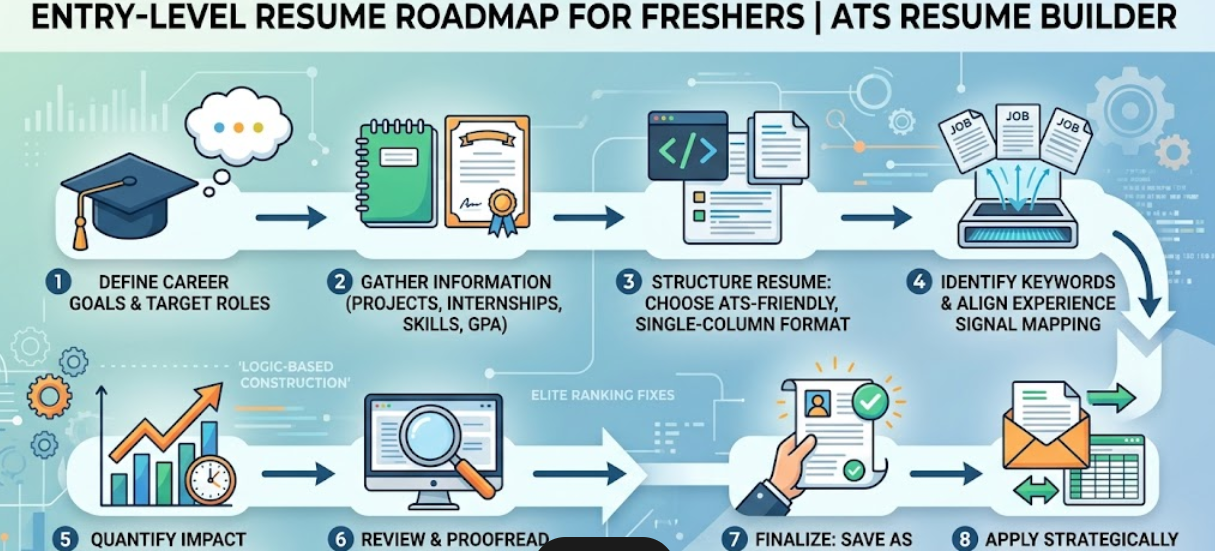
For entry-level candidates and freshers, it is highly recommended to showcase your targeted role preparation in detail. Outline your specific tool competencies, hands-on internships, industrial training, and active technical certifications rather than using generic filler. Frame your past projects as direct evidence that you can handle day-one responsibilities efficiently and adapt to their workflow. By maintaining a clean editorial layout, utilizing generous visual white space, and writing in a calm, human voice, your proposal becomes a much stronger application. This targeted approach is what separates the top candidates from the standard application stack.
Treating companies as specific partners rather than random job listings turns you into a well-prepared candidate.
Examples of Clear Openings
A direct comparison of generic opening phrases with personalized, focused alternatives.
| Generic Outreach (Avoid) | Focused Outreach (Do This) |
|---|---|
| "Dear Sir, I am applying for the open developer position. I am highly motivated and looking for a chance to grow." | "I noticed your engineering team is preparing to scale your serverless data migration. Having handled similar cloud migrations in my previous role, I wanted to share the approach we used to balance the database load." |
| "Please check my resume for any open role. I am open to work and want to pick your brain." | "I read your recent post regarding customer onboarding friction in your SaaS tool. I put together a quick, three-step outline of how we reduced setup friction by 20% in my last team, in case you find it useful." |
Common Job Search Mistakes
Recruiters quickly recognize generic behavior. Ensure your approach is targeted and professional.
Mass Spam Submissions
Submitting identical resumes to dozens of portals daily makes it harder for recruiters to understand your focus. Recruiters spot copy-pasted files quickly. Focus on quality research rather than high volume.
The "Open to Work" Banner
While well-intentioned, the green banner can sometimes carry a subtle hiring bias. Let your specific tool competencies, certifications, and project wins do the talking instead.
Applying to Unrelated Roles
Applying for multiple different positions at a single company destroys your specialization. Target one clear track where your background provides a practical contribution.
Listing Tasks Instead of Outcomes
Your profiles should never read like standard job descriptions. Highlight the specific wins, metrics, and technical contributions that prove your past performance.
Frequently Answered
Calm recruiter insights answering the most common questions regarding job search strategies.
How many jobs should I apply to per week?
Focus on quality over volume by targeting three to five highly researched roles per week. Spend your time customizing your message, identifying decision-makers, and securing referrals rather than clicking submit on hundreds of portals.
Is direct outreach to hiring managers really effective?
Yes. Focused, value-first messages that focus on a manager's current team priorities stand out quickly because very few candidates take the time to do genuine, personalized research.
How do I find referrals if I don't have a large network?
Start by connecting with peers who are working in similar engineering or marketing roles at your target firms. Build a professional relationship by asking constructive questions about their tech stack or onboarding workflow, rather than quickly asking for a job recommendation.
Should I mention my targeted role certifications?
Absolutely. For freshers and entry-level candidates, detail your industry-recognized certifications, hands-on internships, and specialized tool training prominent on your layout. This highlights your practical readiness.